

Subtotal $0.00

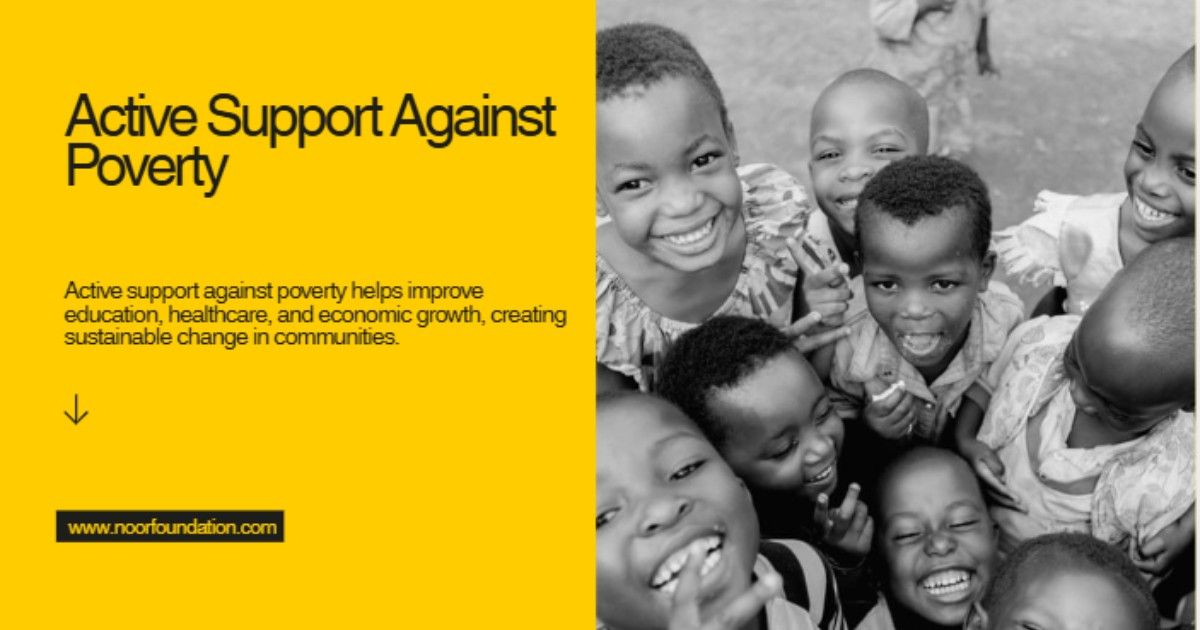
Poverty is one of the greatest challenges humanity faces today. Millions of people around the world still struggle to access food, secure shelter, healthcare, and education services. While governments and non-governmental organizations play a major role in reducing poverty, Active Support Against Poverty from individuals can also create meaningful and lasting change.
Fighting poverty is not merely a matter of sympathetic participation but also an active one, which may open the real possibility for people to lead better lives. Whether it is by providing financial support, volunteering, providing educational training, or advocating, every effort will build communities in a stronger, more resilient manner.
This guide discusses viable and effective ways anyone can adopt to help reduce poverty and achieve long-term outcomes.
Learning to Live with Poverty and Why it Matters
Active Support Against Poverty does not necessarily mean that there is no money, which is why one should know before seeking solutions. Tighter communities lead to stronger economies, safer communities, and better lives for all. You can explore Global Poverty Reduction Programs offered by the World Bank to understand data-driven strategies and long-term poverty solutions worldwide.
Some of the obstacles to the progress of people living in poverty include:
- Unstable income
- Poor nutrition
- Limited schooling
- Unsafe living conditions
- Poor access to medical services
When these problems amass, they form generational cycles. Enhanced community participation can help interrupt these cycles by creating open access to resources and opportunities.
There is not just a moral obligation to support poverty reduction, but it is also beneficial to society as a whole. Tighter communities lead to stronger economies, safer communities, and better lives for all.
1. Give Intelligently to Reliable Organizations
Donations are among the quickest ways to support poverty relief efforts. Yet, to make donations work, one will have to do more than just put money into envelopes; one will also have to select organizations that allocate their resources responsibly and transparently.
Research: Before giving away, research:
- How funds are allocated
- Program success rates
- Community impact
- Organizational transparency
Even small gifts can help provide meals, school supplies, health facilities, and emergency services.
It is often conformity, rather than extent. Long-term programs can help change the situation permanently, and thus, a small recurring donation will help.
2. Give Your Time and Expertise
Not everyone can afford to donate regularly, but time and effort are also appreciated.
Volunteering will enable you to make a direct contribution to such initiatives as:
- Food distribution
- Mentorship programs
- Shelter support
- Community development projects.
- Educational workshops
Talented volunteers, such as educators, health professionals, and digital experts, can offer expertise that would otherwise be unaffordable for the organization.
Volunteering, beyond assisting others, enhances empathy and strengthens relationships in communities.
3. Support Education Initiatives
Education is widely recognized as one of the best solutions to poverty in the long term. People are more likely to get stable jobs and become financially independent when they have knowledge and practical skills.
Education support can be given in the form of:
- Funding school materials
- Sponsoring scholarships
- Literacy programs are supported.
- Giving donations of books and technology.
- Mentoring students
High learning levels of learning will lead to reduced unemployment and better health outcomes for communities, and this spillover will impact the next generation.
4. Supporter of Equitable Opportunities
Advocacy is a highly effective tool for addressing systemic causes of poverty. By raising awareness and pushing for policy change, people can bring about greater change.
Advocacy does not necessarily need massive platforms. Simple actions can include:
- Distributing teaching materials.
- Engaging in community deliberations.
- Sponsoring programs that encourage economic inclusion.
- Promoting equal service access.
The more voices that come forward, the more likely decision-makers are to consider policies that empower vulnerable people.
5. Encourage Economic Empowerment and Job Training
One of the best ways out of active support against poverty is access to stable employment. Employing job training and entrepreneurship programs enables individuals to acquire skills that help them earn a stable income.
You would contribute to economic empowerment by:
- Giving donations to workforce development programs.
- Mentoring job seekers
- Favouring small enterprises.
- Promoting vocational education.
Assistance in making someone employable is not just a response to need; it creates a feeling of confidence and future independence.
6. Sponsor Local Town Fundraising Events
Community fundraising produces a communal effect. Outcomes can be powerful when individuals gather around a common goal.
Examples include:
- Charity runs or walks
- School fundraising events
- Donation drives
- Online campaigns
- Benefit concerts
These programs not only generate funding but also sensitize people to issues of poverty and motivate them to participate. Good communities are also a source of long-term social change.
7. Minimise Wastes and Promote Responsible Giving
Most families end up disposing of some items that may be of great assistance to needy families. On average, clothing, furniture, appliances, and school supplies can be donated to a second life when properly donated.
Before giving away products, they should be clean, working, and in good taste and in keeping with the dignity of the recipients.
Responsible giving is the practice that looks beyond disposal to create meaningful redistribution, assisting the environment and those who are struggling.
8. Sponsor Affordable Healthcare Access
Delays in medical treatment will rapidly push struggling families into even greater economic hardship. Funding healthcare projects is one way of avoiding this vicious cycle.
Gifts may help in:
- Preventive care
- Vaccinations
- Maternal health services
- Mental health support
- Emergency treatment
Healthy people would be better positioned to seek education and work opportunities, so healthcare should be an important pillar in reducing poverty.
9. Promote Young People’s Engagement in Community Change
The youth are full of energy, creativity and new insights in addressing social issues. The involvement of youth helps foster a culture of caring and responsibility.
Students and young professionals will be able to contribute by:
- Volunteer programs
- Awareness campaigns
- Peer mentorship
- Community projects
Early engagement leads to a lifelong commitment to positive social change.
10. Practice Long-term commitment
Temporary measures are useful, but permanent improvements take a long time.
It may be a long-term commitment, and may be:
- Setting annual giving goals
- Volunteering regularly
- Being updated on the problems of poverty.
- Fostering the continuation of efforts.
Individual, consistent donations contribute to significant change in the long run.
True change is slow to come by in one day – yet perseverance brings results.
The Importance of Collective Action
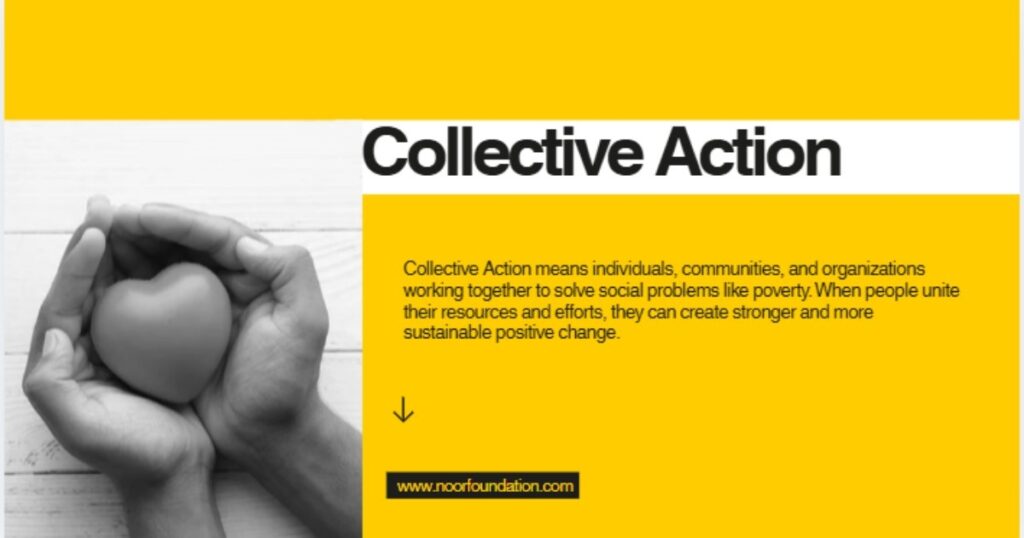
An individual cannot fight poverty, but when people come together, they can create ripples that lead to quantifiable outcomes.
By collecting together individuals, nonprofits, businesses and communities, one can:
- Expand access to resources
- Enhance the support networks.
- Improve economic mobility
- Foster inclusive growth
All contributions, big and small, help create a more equal world.
Myths of Combating Poverty
Most individuals are afraid to participate because they feel it will not help. As a matter of fact, universal change usually starts with little strides.
Myth: It is better to receive only large donations.
Reality: Smaller, regular contributions help sustain programs.
Myth: It is impossible to decrease poverty.
Reality: Special programs have already raised millions of people out of abject poverty.
Myth: One needs education to assist.
Reality: Everyone can do their part with awareness, kindness, and involvement in the community.
Realizing these facts makes participation seem more attainable.
Active Support Against Poverty: Ways That Work
Solving poverty helps not only an individual but also a community.
When individuals acquire access to education, healthcare, and jobs:
- Economies grow
- Crime rates often decline
- Public health improves
- Social stability increases
An investment in poverty reduction will eventually result in an environment in which all people can do well.
Taking the First Step
There is no need to make a complex start. You may think about something you can do today, such as donating, volunteering, or teaching others.
The first step is to have intention followed by constant effort.
Ask yourself:
- What resources can I share?
- What reasons do I relate to?
- What can I do to make a sustainable contribution?
Small actions can lead to great things.
Fighting Poverty Through Action
Active support against poverty is one of the best methods of assisting the future. This is a complex task but it can be resolved when individuals are included other than being indifferent.
All of this, whether it is contributing to education and healthcare or developing economic access and community integration, helps to end the cycle of poverty that keeps many individuals in poverty.
You do not have to have miracle materials to alter anything, only you have to want to do it.
When compassion is converted into real assistance, the societies get stronger, the possibilities start growing, and hope can be easily provided to people who need it the most.
The concept of sustainable change rests on collective responsibility and the decision to invest in the present can contribute to creating a more just future.

